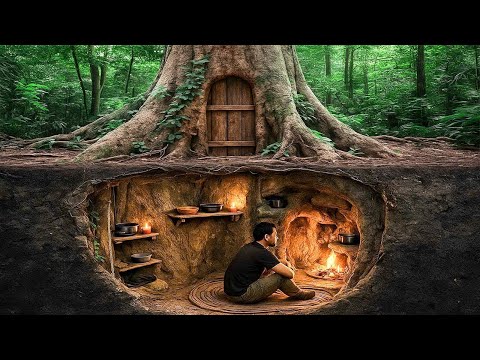
A house carved into the cliff, built with nothing but bare hands

About
No channel description available.


Video Description
Watch how a man carves a house into a cliff, building everything from scratch with nothing but bare hands and determination. Using only natural resources and handmade tools, he turns the wilderness into a place to call home — a true testament to survival, creativity, and human ingenuity. The most notable part of this video is the iron-making process (from minute 2:34 to 3:37): Primitive Process of Making Iron from “Orange Slime” in Muddy Wetlands Step 1 – Collecting Raw Material Look for stagnant water areas, swamps, ponds, lakes, or streams with orange-red mud (orange slime), which indicates the presence of iron hydroxide produced by iron bacteria. Scoop up the orange-red mud using baskets, trays, or hands, removing grass, roots, and large debris. Step 2 – Preparing Charcoal and Flux Burn wood to make charcoal, then crush it into fine powder. Find clay or limestone (as a flux) to lower the melting point of the ore and help separate slag from the metal. Step 3 – Making Ore Pellets Mix the dried iron-rich mud with powdered charcoal and a small amount of clay. Add just enough water so the mixture sticks together. Shape the mixture into small pellets. Dry the pellets completely, preferably on a warm furnace top to prevent cracking. Step 4 – Smelting the Ore Layer charcoal and ore pellets inside a clay furnace or a simple ground pit furnace. Maintain a high temperature (above 1,150 °C / 2,100 °F) for several hours by blowing air with a bellows or through bamboo pipes. Step 5 – Separating Iron from Slag Remove the hot bloom (mass of metal and slag) from the furnace while still glowing red. Hammer it to break away the brittle slag. Quench in water to make the slag brittle and easier to remove. Repeat the cycle of heating, hammering, and quenching multiple times to improve purity. Step 6 – Collecting the Iron After repeated processing, gather the small iron pieces or lumps. Yield is usually low—about 0.1 kg of iron per separation cycle. .... 🔔Don't forget to like, comment, and subscribe my channel: https://www.youtube.com/@havgs1701


Cliff Dwellings Toolkit
AI-recommended products based on this video

Table Top Magnet Game Toy Magnetic Stone Board Chess Game Toy for Family Christmas Party Portable Magnet Stone Board Party Supplies

Fire Escape Ladder, 13 FT Emergency Escape Ladders, Portable Climbing Rescue Rope Ladder for 2 Story Home Window Balcony Railing Treehouse

Liahelianx Mini Citrus Press - Handheld Lemon & Lime Juicer with Screw Top Lid, Compact Manual Juice Extractor for Cocktails, Drinks, Kitchen - Durable, Easy Clean, Portable Fruit Squeezer
