From XF-88 to F-101 Voodoo: Evolution of a Supersonic Interceptor

DroneScapes
@dronescapesAbout
Welcome to DroneScapes, and thanks for spending time with us, Embark on an exciting exploration of aviation history, from World War II and the Vietnam War to groundbreaking innovations. DroneScapes offers high-quality videos that blend archival footage, expert interviews, and detailed animations to provide an immersive and comprehensive experience. Topics Covered: WWII Aviation, Aviation Icons, Cold War Aviation, Modern Aviation and Aviation Documentaries Stay connected with DroneScapes and join our community of aviation enthusiasts! ➤ Join the channel: https://www.youtube.com/@Dronescapes/join ➤ THREADS: https://www.threads.net/@dronescapesvideos ➤ FB: https://www.facebook.com/Dronescapesvideos ➤ IG: https://www.instagram.com/dronescapesvideos ➤ BlueSky: https://bsky.app/profile/dronescapes.bsky.social ➤ Tumblr: https://www.tumblr.com/blog/dronescapesvideos ➤ X/Twitter: https://dronescapes.video/2p89vedj

![The "Flying Artillery" That Smashed The Fortress of Rabaul [RESTORED & COLORIZED WWII HISTORY]](https://imgz.pc97.com/?width=500&fit=cover&image=https://i.ytimg.com/vi/8VIPMvfdS0k/hqdefault.jpg)
![WWII IN COLOR: Inside The Pacific Air War & Carriers Operations [Restored Footage]](https://imgz.pc97.com/?width=500&fit=cover&image=https://i.ytimg.com/vi/RxcnJNnOiaw/hqdefault.jpg)
Video Description
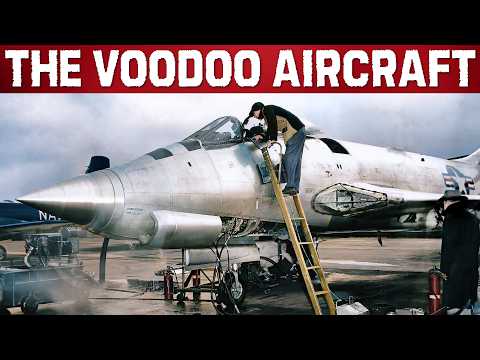
From XF-88 to F-101 Voodoo: The Evolution of a Supersonic Interceptor Buckle up, aviation enthusiasts, for a thrilling ride through the annals of aerospace innovation! This documentary traces the remarkable journey from the experimental XF-88 Voodoo to the legendary F-101 Voodoo, showcasing the ingenuity, determination, and technological leaps that transformed a promising prototype into a formidable supersonic interceptor. XF-88: The Ambitious Underdog We begin with the XF-88, a sleek, twin-engine jet fighter designed by McDonnell Aircraft in the late 1940s. Conceived during the dawn of the jet age, the XF-88 was envisioned as a long-range escort fighter and interceptor capable of defending America's vast airspace from potential Soviet bomber threats. Though it faced numerous challenges and ultimately lost out to other aircraft in its initial role, the XF-88's innovative design and powerful performance laid the groundwork for its iconic successor. Enter the F-101 Voodoo: A Supersonic Powerhouse Witness the transformation as the XF-88's design evolves into the awe-inspiring F-101 Voodoo. With its swept wings, twin afterburning engines, and a distinctive elongated nose, the Voodoo was a true marvel of engineering, capable of reaching speeds exceeding Mach 1.7. Designed primarily as a nuclear-capable interceptor, the Voodoo also proved its versatility in reconnaissance and fighter-bomber roles. Cold War Guardian: Journey through the heart of the Cold War era as we explore the F-101 Voodoo's operational history. Deployed by the United States Air Force and the Royal Canadian Air Force, the Voodoo stood as a vigilant guardian, ready to intercept any potential threats to North American airspace. Hear firsthand accounts from pilots who flew this iconic aircraft, their stories painting a vivid picture of the challenges and triumphs of Cold War aviation. Technological Marvels: Delve into the cutting-edge technologies that made the F-101 Voodoo a force to be reckoned with. From its powerful Pratt & Whitney J57 turbojet engines to its advanced radar and fire-control systems, the Voodoo represented the pinnacle of aviation technology in its time. Explore the innovations that allowed it to achieve supersonic speeds, track and intercept enemy aircraft, and deliver devastating firepower. Legacy of the Voodoo: Though the F-101 Voodoo's service life was relatively short, its impact on aviation history is undeniable. It served as a crucial deterrent during the Cold War, showcasing American airpower and technological prowess. Its legacy lives on in the countless pilots who flew it, the engineers who designed it, and the aviation enthusiasts who continue to admire its sleek lines and impressive capabilities. General characteristics Crew: 2 Length: 67 ft 5 in (20.55 m) Wingspan: 39 ft 8 in (12.09 m) Height: 18 ft 0 in (5.49 m) Wing area: 368 sq ft (34.2 m2) Airfoil: root: NACA 65A007 (modified); tip: NACA 65A006 (modified)[43] Empty weight: 28,495 lb (12,925 kg) Gross weight: 45,665 lb (20,713 kg) Max takeoff weight: 52,400 lb (23,768 kg) Fuel capacity: 2,053 US gal (1,709 imp gal; 7,770 l) internals plus 2x optional 450 US gal (370 imp gal; 1,700 l) drop-tanks Powerplant: 2 × Pratt & Whitney J57-P-55 afterburning turbojet engines, 11,990 lbf (53.3 kN) thrust each dry, 16,900 lbf (75 kN) with afterburner Performance Maximum speed: 1,134 mph (1,825 km/h, 985 kn) at 35,000 ft (11,000 m) Maximum speed: Mach 1.72 Range: 1,520 mi (2,450 km, 1,320 nmi) Service ceiling: 58,400 ft (17,800 m) Wing loading: 124 lb/sq ft (610 kg/m2) Thrust/weight: 0.74 Armament Missiles: 4 (originally 6)× AIM-4 Falcon, or 2× AIR-2 Genie nuclear rockets, plus 2× AIM-4 Falcon Avionics Hughes MG-13 fire control system Watch more aircraft, heroes, and their stories and missions ➤ https://www.youtube.com/@Dronescapes To support/join the channel ➤ https://www.youtube.com/@Dronescapes/join IG ➤ https://www.instagram.com/dronescapesvideos FB ➤ https://www.facebook.com/Dronescapesvideos X/Twitter ➤ https://dronescapes.video/2p89vedj THREADS ➤ https://www.threads.net/@dronescapesvideos #voodoo #F101 #aircraft

![The Combat History of The Black Sheep Squadron [RARE RESTORED FOOTAGE AND INTERVIEWS]](https://imgz.pc97.com/?width=500&fit=cover&image=https://i.ytimg.com/vi/puLcps169hk/hqdefault.jpg)



![THE PHANTOM GETS CLAWS: Flying the Agile F-4E with Slatted Wings [RESTORED RARE FILM]](https://imgz.pc97.com/?width=500&fit=cover&image=https://i.ytimg.com/vi/3in3NFOhTSo/hqdefault.jpg)
Essential Aviation History Books
AI-recommended products based on this video
