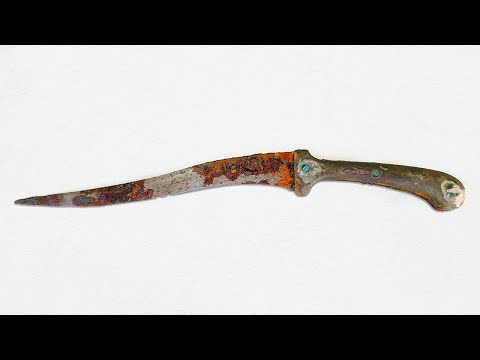
Old Carcano M1891 Italian Bayonet – Full Restoration


Screws And Tools
@screwsandtoolsAbout
Hello I'm Alex! Thank you for attention and welcome to my channel. Screws and Tools is a channel dedicated to restoring old, antique, vintage, and rusty tools. I cover woodworking, metalworking (including non‑ferrous metals), leatherworking, knife making, and various DIY projects—all produced by me alone. I restore items such as knives, Caucasian daggers, swords, shashkas, sabers, cleavers, axes, and kitchen tools, continually honing my craft. And importantly, I always show my mistakes—because when you watch my videos, you learn not only from what works, but also from what doesn’t. I hope you enjoy my videos—thank you for watching! I truly appreciate every visit to my channel. Don’t forget to subscribe and join me on this restoration journey!
Latest Posts


Video Description
Hello! Today I'm starting the restoration of an antique Italian bayonet knife from the Carcano system, model M1891. This item doesn’t belong to me — I was asked to restore it, and I will restore this bayonet. The overall condition was below average: the wooden handle had a large chip in the old wood. The scabbard was heavily rustedThe leather hanger was dry, dusty, and cracked. I began with the scabbard and bayonet parts, cleaning them using a sandblaster and brushes. After that, I hand-polished the surfaces with sandpaper to remove rust and corrosion. Then I focused on the release button, which was completely non-functional. I managed to restore it to working condition, disassembled the mechanism, cleaned all internal components, and lubricated them with oil and grease. Once reassembled and secured with the nut, the mechanism functioned flawlessly. Next, I moved on to the handle. To restore it, I used a small piece of 19th-century wood. I always keep leftover pieces of antique leather and wood from the 19th–20th centuries. I carved a matching fragment and glued it into the missing section of the handle. After sanding the area smooth, I stained the wood and sealed it using a special wax-paste — a mix of protective compounds to prevent further rust and moisture damage to both wood and metal. Then came the restoration of the original leather suspension. Time had taken its toll: the leather was dry, dirty, and fragile. I began by cleaning the surface with different brushes to remove dust and dirt. Next, I applied a specialized leather cleaner to lift deep-seated grime and stains. After prepping the surface, I glued the torn part of the hanger. Once the adhesive dried overnight, I stitched the damaged sections by hand. For preservation, I used a wax-paste I make myself — it contains beeswax, linseed oil, and essential oils. Once absorbed, I treated the surface with pure linseed oil for flexibility and protection. To finish, I applied edge paste and polished the leather on a wooden buffing wheel. Finally, I used a leather dye to restore the hanger’s original tone. I hope you enjoyed this restoration video. Please like, share, and comment on this video. Thank you for watching! Sincerely, Alex. Thanks for attention! Good luck and health to everyone! With best wishes, Alex! Please subscribe to my channel: @ScrewsAndTools 🍖 My New Cooking channel! @screwsandtoolscooking Patreon: https://www.patreon.com/Screwsandtools Paypal: paypal.me/screwsandtools Facebook: https://www.facebook.com/scresandtools/ Instagram: https://www.instagram.com/screwsandtools/ #screwsandtools #bayonet #restoration





Revive Your Bayonet: Must-Haves
AI-recommended products based on this video
