What's the science behind weight-loss drugs? - The Food Chain podcast, BBC World Service

BBC World Service
@bbcworldserviceAbout
👋🏽 Welcome to the official BBC World Service YouTube channel. Whether you are looking for podcasts, documentaries, interviews or explainers, if you are interested in global stories, we hope you will feel at home with us. Here you can watch your favourite podcasts and look forward to the best of the BBC World Service journalism, from culture and entertainment to undercover investigations, science, history and all the big issues of our time. All our videos have subtitles that can be translated into the language that suits you best. We can’t wait to share our stories with you. Come join us!




Video Description
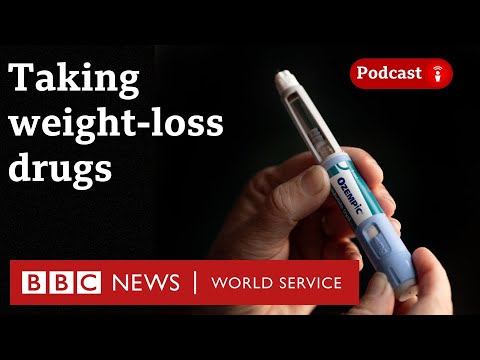
Ruth Alexander speaks to patients about their experiences of weight-loss drugs. Click here to subscribe to our channel 👉🏽 https://bbc.in/3VyyriM The new class of drugs impact appetite, making you feel full sooner, and slowing the rate at which your stomach empties. Known as GLP-1 medications, studies suggest that patients can lose 10% or even up to 25% of their body weight depending on which drug they use. For many who have struggled with obesity and obesity related disease the drugs have the potential to transform their health. However some patients have struggled with the side effects of the drugs and the manufacturers’ own studies indicate that if people stopping taking them, much of the weight lost is regained, making them drugs for life for some. Ruth Alexander speaks to Professor of Cardiometabolic Medicine, Naveed Sattar, at Glasgow University who is Chair of the UK government’s obesity mission. He explains how these drugs work and the potentials costs and savings for the National Health Service, or NHS. Adrienne Bitar, historian at Cornell University in New York, is the author of ‘Diet and the Disease of Civilization’, a study of diet books of the 20th century. She explains the ideas diet culture is built on. And Ruth asks Gary Foster, Chief Scientific Officer at WeightWatchers, what these weight-loss drugs will mean for the multi-billion-dollar diet industry. 00:00 The new weight-loss drugs 05:31 How do the drugs work? 08:29 The benefits 10:23 Why the medicines don't suit everyone 15:58 The cost to healthcare providers 18:25 The history of diet drugs 21:12 The multi-billion dollar industry 27:42 Attitudes to the drug Presented by Ruth Alexander Produced by Beatrice Pickup Check out more episodes of The Food Chain here 👉🏽 https://www.youtube.com/playlist?list=PLz_B0PFGIn4f4kxjsAfebFJku6zL3ZyEY ---------------- This is the official BBC World Service YouTube channel. If you like what we do, you can also find us here: Instagram 👉🏽 https://www.instagram.com/bbcworldservice Twitter 👉🏽 https://twitter.com/bbcworldservice Facebook 👉🏽 https://facebook.com/bbcworldservice BBC World Service website 👉🏽 https://www.bbc.co.uk/worldserviceradio Thanks for watching and subscribing! #BBCWorldService #WorldService #weightloss #weightlossdrugs















Transform Your Wellness Journey
AI-recommended products based on this video

-2 Pack- 28 oz Protein Shaker Bottles for Protein Mixes - 2x Wire Whisk | Leak Proof Shaker Cups for Protein Shakes | Protein Shaker Bottle Pack (Black/Transparent)

BISSELL Little Green Mini Portable Carpet and Upholstery Deep Cleaner, Car/Auto Detailer, with HydroRinse Self-Cleaning Tool and 4" Tough Stain Tool, Tea Green, 4075

Smart Watch for Men/Women, 1.95" AMOLED Fitness Tracker Watches with Bluetooth Calls/Flashlight/100+ Sport Modes Heart Rate/Sleep Monitor Ultra Lightweight Ultrathin Design

Smart Watch for Men Women (Answer/Make Call), 1.96" HD Smartwatch Fitness Activity Tracker, 110+ Sports IP68 Waterproof, Heart Rate/Sleep Monitor/Pedometer/Calories, Fitness Watch for Android iOS
