Why are some people bad at maths? - CrowdScience podcast, BBC World Service

BBC World Service
@bbcworldserviceAbout
👋🏽 Welcome to the official BBC World Service YouTube channel. Whether you are looking for podcasts, documentaries, interviews or explainers, if you are interested in global stories, we hope you will feel at home with us. Here you can watch your favourite podcasts and look forward to the best of the BBC World Service journalism, from culture and entertainment to undercover investigations, science, history and all the big issues of our time. All our videos have subtitles that can be translated into the language that suits you best. We can’t wait to share our stories with you. Come join us!
Latest Posts
No results found. Try different keywords.
Video Description
When CrowdScience listener Israel from Papua New Guinea did badly on a maths test in third grade, he looked around the class and realised that almost all the other students had received a better result. Click here to subscribe to our channel 👉🏽 https://bbc.in/3VyyriM Since then, he has always wondered: Why are some people better at maths than others? And Israel isn’t the only one to think about this. Our listeners from all over the world describe their relationships with numbers, which run the full gamut from love to hate. So are we all in control of our own mathematical fate, or are some people just naturally bad at it? Presenter Anand Jagatia hears about studies of identical and non-identical twins showing how genetics and environment interact to shape our mathematical abilities. Our numerical abilities are not set in stone. It’s always possible to improve and getting rid of negative feelings and anxiety around maths could be the key, says psychologist Iro Xenidou-Dervou. Some countries seem to support children’s maths skills better than others. China and Finland both rank highly in international league tables. Education experts in both countries discuss whether there are any keys to a successful mathematics education. And there is something underlying our ability to do maths in the first place - our number sense. We hear what happens when this number sense does not work as intended and what can be done about it. 00:00 Can you solve this maths problem? 01:14 CrowdScience listener Israel from Papua New Guinea 04:13 Can you be naturally good or bad at maths? 10:00 Maths anxiety 14:22 Top performing countries 19:20 The cultures that don’t use counting words 22:19 Dyscalculia 26:05 Emma’s story 27:46 Maths problem – the answer Watch more episodes of CrowdScience here 👉🏽 https://www.youtube.com/playlist?list=PLz_B0PFGIn4cT4qluPKNtMmBAPPrpoxvT ---------------- This is the official BBC World Service YouTube channel. If you like what we do, you can also find us here: Instagram 👉🏽 https://www.instagram.com/bbcworldservice Twitter 👉🏽 https://twitter.com/bbcworldservice Facebook 👉🏽 https://facebook.com/bbcworldservice BBC World Service website 👉🏽 https://www.bbc.co.uk/worldserviceradio Thanks for watching and subscribing! #BBCWorldService #WorldService #science #maths







Boost Your Math Skills Today
AI-recommended products based on this video

Easter Gifts For Kids: Easter I Spy Search & Find for Kids Ages 3-7: Cute Spring Puzzles, Hidden Objects and Brain Games – Screen-Free Fun, Easter Basket Stuffers and Family Activities

Lindt Fun Friends Easter Milk Chocolates, 100-Gram Bag, Perfect for Easter Gift for Kids & Egg Hunts

It's Not Easy Being a Bunny: An Early Reader Book for Kids

Little Blue Truck's Springtime: An Easter And Springtime Book For Kids – An Interactive Adventure with Baby Animals
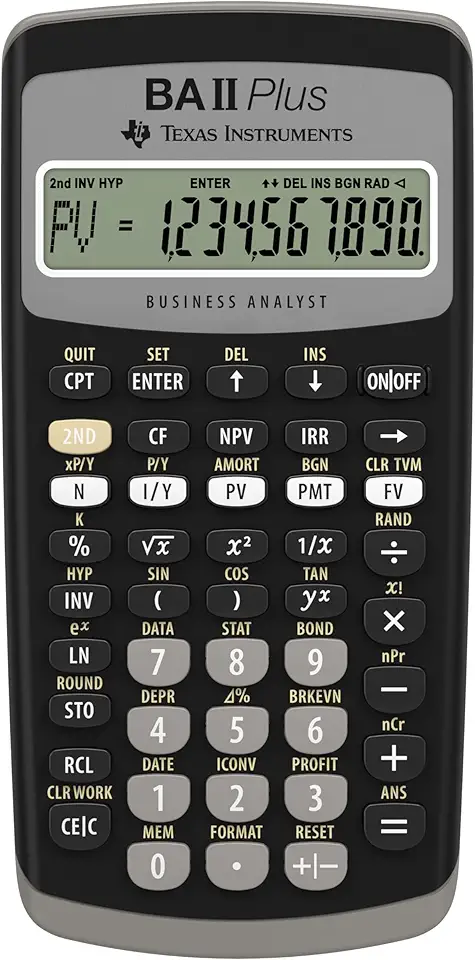
Texas Instruments BA II Plus Financial Calculator, Black