Why US Special Forces Switched to the SCAR (briefly)

Task & Purpose
@taskandpurposeAbout
Task & Purpose was founded in 2014 with a mission to inform, engage, entertain, and stand up for active-duty military members, veterans, and their families. The site quickly became one of the most trusted news and investigative journalism sources for the military, with its journalists reporting everywhere from the Pentagon to the White House and beyond. Videos are produced and hosted by Kyle Gunn.
Latest Posts
No results found. Try different keywords.
Video Description
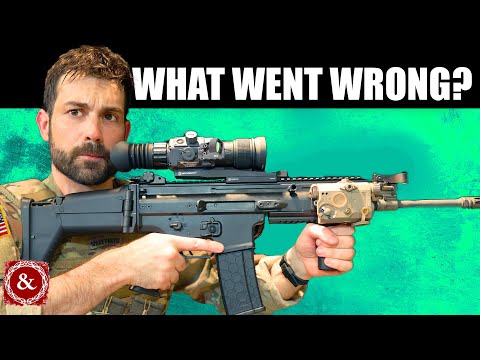
Get your own Goat Model Today! Shop here: https://bit.ly/3Eh1z6d While the SCAR-Light and -Heavy were designed and built in tandem, their performance and service histories diverged in 2010. The weapons were mostly living up to the hype but there were some early teething issues holding them back. Every weapon runs into this teething problems but what makes the difference between success and failure is how easy it is to correct these early problems. In the case of the SCAR, the Light version named the MK 16 had the misfortune of having more issues and less capability advances than its heavier MK17 version. Written by: Chris Cappy & Diego Aceituno Edited by: Michael Michaelides The MK 16 had the distinction of creating a brand new class of malfunction never seen before. It was particularly vulnerable to double and triple feed malfunctions from bad magazines. Bad or worn magazines were pretty common to most weapons around the 2000-2010 timeframe.All that extra space above the bolt and carrier assembly ironically could make the weapon less reliable as extra rounds from a multi feed malfunction went straight up into the enlarged recesses built for the operating rod. In barney style layman’s terms this means the weapon had just enough space for thin 5.56 rounds to get stuck in the attic, but not enough extra space for them to fall back out. US Army special forces veteran Jeff Gurwitch said he saw a squadmate with 4 empty casings stuck in his FN Scars chamber. What’s next an octopulet feed error? Reportedly the only way to clear the jam was a time consuming field strip of the weapon. Another problem was actually caused by SOCOM itself and quickly turned into the SCAR’s most controversial “feature.” In the requirements drawn up, someone involved in the drafting was convinced a reciprocating charging handle was key to a weapon’s reliability. That means that as each round is fired the charging handle moves forward and back with the bolt instead of staying fixed in place like on the M4. The thought process behind this was a soldier could use the charging handle like a forward assist, pushing a gummed-up bolt into battery with a quick slap. Join this channel to get access to perks: https://www.youtube.com/channel/UCSq3p5NKEtyp5Rjd4ctiEbg/join Task & Purpose is a military news and culture oriented channel. We want to foster discussion about the defense industry. Email [email protected] for inquires. #ARMY #MILITARY #WEAPONS
You May Also Like










Essential SCAR Accessories
AI-recommended products based on this video

COLORCORAL Car Cleaning Gel Universal Dust Cleaner Vehicle Auto Detailing Car Vent Keyboard Cleaning Putty Cars Interior Cleaner Dashboard Dust Remover Putty Duster Wipes Swaps Cleaning Kit 160G
