The Evolution Of Automotive Paint


New Mind
@newmindAbout
For most of us, our average day is an experience unlike any other in human history. The world we interact with and engage with is a culmination of millennia of curiosity, probing and discovery. The story of how we got here, the layers of seeking and exploration; that are too often displaced as a triviality of life, is a massive part of the human story. New Mind is a celebration of that journey; the telling of slivers of that human story. Each composition is a careful telling of a slice of our technological world, exploring not just the “how it works” but the evolution of the why – the series of historical events that made it this way.
Latest Posts


Video Description
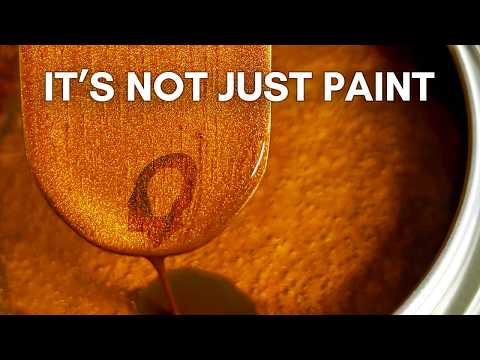
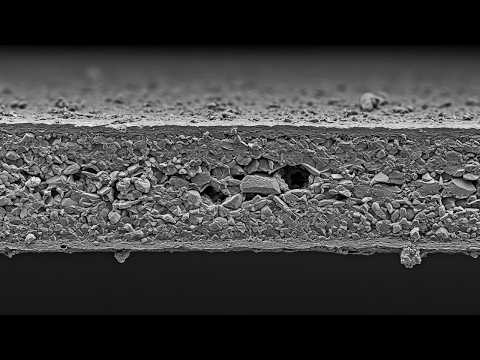
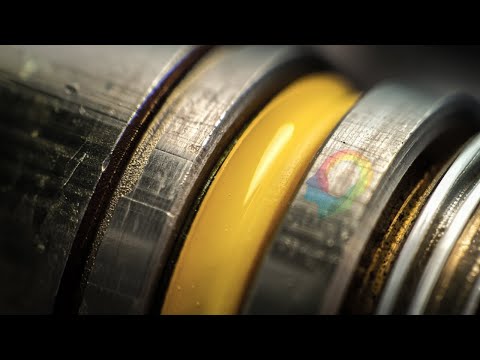
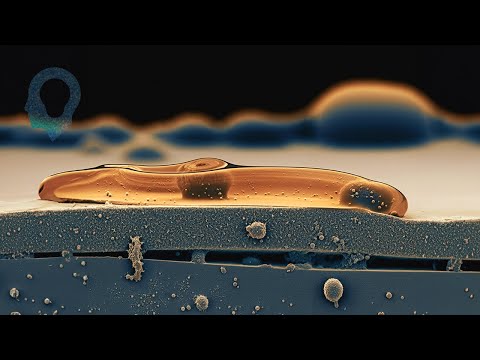
▶ Visit https://brilliant.org/NewMind to get started learning STEM for free, and the first 200 people will get 20% off their annual premium subscription VARNISH At the dawn of the automotive industry, early motor-vehicles were painted in a manner similar to both wooden furniture and horse-drawn carriages of the time. A varnish-like product was brushed onto the vehicle’s surfaces and subsequently sanded and smoothed. After multiple layers of varnish were established, the vehicle was then polished. Varnishes are generally composed of a combination of a drying oil, a resin, and a solvent. LACQUERS The first true automotive specific coatings would emerge in the early 1920s as a result of an accidental discovery. This liquid became the basis for nitrocellulose lacquer, a product that would become a popular staple of the automotive finishing industry for decades to come. Nitrocellulose was the first man-made plastic and it was created in 1862 by Alexander Parkes. Dupont chemist, Edmund Flaherty, would go on to refined the use of nitrocellulose dissolved in a solvent, to create a system that used a combination of naphtha, xylene, toluene, acetone, various ketones, and plasticizing materials that enhance durability and flexibility, to create a fast drying liquid that could be sprayed. Nitrocellulose lacquer has the advantage of being extremely fast drying, and it produces a tougher and more scratch resistant finish. ENAMELS By the 1930s, the development of alkyd enamel coatings would offer a significant enhancement over the properties of existing lacquers. This reaction occurs between the fatty-acids of the oil-portion of the resin and oxygen from the surrounding air, creating a durable film as the solvent evaporates. ACRYLICS In the 1950s, a new acrylic binder technology would be introduced that would transform the automotive coatings industry. Acrylic paints are based on polyacrylate resins. These synthetic resins are produced by the polymerization of acrylic esters or acrylates, forming a durable plastic film. Like previous systems, the acrylates are dissolved within a hydrocarbon solvent and applied using spraying. However, unlike alkyd, acrylate polymerization occurs without surrounding oxygen, and in most production acrylic systems, is initiated with a catalyst based on isocyanates or melamines. Polyacrylate resins do not easily absorb radiation in the solar spectrum, giving them excellent resistance to UV degradation, when compared to previous resins. UNDERCOATS Since the inception of its use, most of these undercoats or primers were composed of a combination of alkyd and oleaginous resins to produce an interface coating. Initially these coatings were applied to individual panels through dip coating, though this would eventually evolve to a combination of dipping and spraying entire body assemblies. Because undercoats directly interface to the vehicle's base metal, they serve as the primary form of corrosion protection. However, the process by which they were applied resulted in inconsistent coverage throughout the vehicles. This was due to recesses and enclosed areas on the vehicle’s body. In the 1960s, Ford Motor Company would pioneer a dramatically different approach to vehicle priming through electrodeposition. The car body is coated on the production line by immersing the body in a tank containing the aqueous primer dispersion and subjecting it to a direct current charge. EPA By the end of the 1970s, the EPA had sought to reduce photochemically reactive hydrocarbon solvent discharges from industrial finish operations by introducing emission requirements that restricted finishes to be sprayed at a minimum volume solids content of 60%. CLEAR COAT This initiative led to a new approach to how automotive finishes were utilized, with specific functions of an automotive coating now being directly engineered into each layer. In the Late 1970s, the first wet-on-wet systems were developed that consisted of a thin base coat and a thicker clear coat. This separation of coating function now allowed for completely different chemistries to be employed between layers. Based on solvents composed of glycol ethers and water, these systems dramatically reduced hydrocarbon emissions and were generally high solid in nature, easily meeting EPA requirements . POLYURETHANES Modern automotive coatings overcome these limitations by using a hybrid dispersion of acrylics, polyurethane and even polyesters. These systems, known as acrylic-polyurethane enamels, incorporate the monomers of each resin in a proprietary combination that, once initiated by a catalyst, undergo polymerization. By adjusting the constituent resins and their quantities as well as the catalyst formulation, the sequence and rate of how this polymer network is formed can be modified, and the properties of the composite film adjusted to suit the needs of the product. SUPPORT NEW MIND ON PATREON https://www.patreon.com/newmind
You May Also Like








Revamp Your Ride's Color
AI-recommended products based on this video

Paint Sprayer Electric Spray Gun: 700W Spray Paint Gun with 1200ml Container, 4 Nozzles & 3 Patterns, Adjustable Air Flow, Easy Cleaning for House Painting, Furniture, Fence, Walls, Door (Red)

Paint Sprayer Electric Spray Gun: 700W Spray Paint Gun with 1200ml Container, 4 Nozzles & 3 Patterns, Adjustable Air Flow, Easy Cleaning for House Painting, Furniture, Fence, Walls, Door (Royal Blue)

Cordless Paint Sprayer for Dewalt 20V MAX Battery.Paint Spray Gun with Powerful Motor and 4 Copper Nozzle.650w Electric HVIP Sprayer for House Painting,Furniture, Wall, Door.(NOT Battery)
