Why Didn’t We Go Extinct 10 Million Years Ago? | Boring Sapiens

Mr. Deep History
@mr.deephistoryytAbout
Mr. Deep History is a calm platform for science-based storytelling from origins to empires. Longform essays on human evolution, archaeology, early civilizations, and how societies change, survive, and collapse - no hype, just the record, told slowly. Designed to help you slow down, focus, and drift off if you want to: perfect for deep work, long walks, late-night thinking, and sleep. Episodes are built with respect for evidence, drawing on archaeology, primary texts when available, and modern research. We use AI tools to assist parts of the workflow (research support, drafting, narration, imagery), then edit and polish for clarity and accuracy. These videos blend research with documentary-style storytelling for learning and atmosphere - not a substitute for academic or professional advice. Reconstructions are interpretive, and all visuals are AI-generated artistic impressions. Sit back. Listen. Relax. Think. Thanks for being here 😊


Video Description
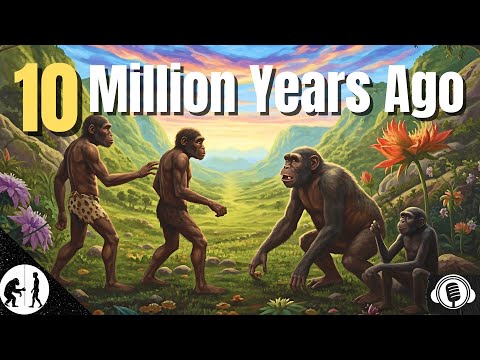
Why didn’t our ancestors vanish like so many other apes before us? 10 million years ago, the world was a true Planet of the Apes. Nearly one hundred species thrived in the Miocene forests of Africa, Europe, and Asia. Giants like Gigantopithecus towered in southern Asia, while tiny apes like Simiolus swung in the canopy. Yet almost all of them disappeared. This episode tells the full story of survival and extinction: from the golden age of Miocene apes, through cooling climates and vanishing forests, to the rise of the last humans standing. Along the way, we meet forgotten cousins—Oreopithecus, Dryopithecus, Paranthropus, and even mysterious island dwellers like Homo floresiensis. ⭐ Why are there only eight great apes alive today? Was our survival the result of luck, adaptability, or something else entirely? Join us for a slow, detailed journey through deep time—told softly, for sleepless sapiens at 2AM. ▀▀▀▀▀▀▀▀▀▀▀▀▀▀▀▀▀▀▀▀▀▀▀ 𝐓𝐈𝐌𝐄𝐒𝐓𝐀𝐌𝐏𝐒: 00:00 - Intro 00:56 - The Planet of the Apes That Really Happened 12:20 - Forests Without End 19:18 - The Great Ape Carnival 29:54 - The Birth of Giants 40:03 - The Cooling World 49:39 - Anatolia’s Forgotten Apes 58:37 - The First Losers 1:07:01 - Asia Hangs On 1:15:25 - The Savannah Shock 1:24:40 - The Last Giants 1:33:48 - Nutcracker Cousins 1:43:39 - First Firelight? 1:52:47 - Generalists Win 2:01:31 - The Arms Race in Africa 2:11:12 - Climate Roulette 2:18:26 - Europe’s Experiments 2:26:37 - Asia’s Outsiders 2:34:04 - Africa’s Crucible 2:41:33 - A Crowded World 2:49:12 - The Competitive Edge 2:58:36 - The Vanishings 3:07:16 - The Last Ape Standing 3:15:47 - Why We Didn’t Go Extinct ▀▀▀▀▀▀▀▀▀▀▀▀▀▀▀▀▀▀▀▀▀▀▀▀▀▀▀ 📌 Calm science, no hype, no speculation — just what we know so far. ------------------------------------------------------------------ #humanevolution #prehistory #deeptime #SleeplessHomo #boringsapiens #whywesurvived #deeptime #ancienthumans #documentary #documentaryforsleep #documentaries #apes #greatapes ------------------------------------------------------------------ 👉 If you enjoy this type of content, please like, subscribe, and share — it helps other curious sapiens find their way to knowledge. ------------------------------------------------------------------ Sleepless Homo- Longform sleep-core documentaries about ancient humans extinct species, myth, memory, and early humanity — told softly by a tired ape with Wi-Fi. Bedtime stories for burnt-out sapiens. ------------------------------------------------------------------- References: - Begun, D. R. (2010). Miocene Hominids and the Origins of the African Apes and Humans. Annual Review of Anthropolog; - Stewart, K. M., & Disotell, T. R. (1998). Primate Evolution—In and Out of Africa. Current Biology; - Begun, D. R. (2003). Once We Were Not Alone: The Miocene Radiation of Apes. Daedalus; - Andrews, P., & Kelley, J. (2007). Middle Miocene Dispersals of Apes. Folia Primatologica; - Begun, D. R. (2015). Fossil Record of Miocene Hominoids. In Henke, W., & Tattersall, I. (Eds.), Handbook of Paleoanthropology. Springer. - Harrison, T. (2010). Apes among the Tangled Branches: Phylogeny and Adaptive Radiation of Miocene Hominoids. Annual Review of Anthropology - Kaya, F., Begun, D. R., & Aygün, E. (2023). Anadoluvius turkae, a new great ape from the Miocene of Anatolia and its implications for hominid evolution. Communications Biology;




Unlock Evolution: Paleontology Must-Haves
AI-recommended products based on this video

Pishengfa DIY Stitch Book, Embroidery Stitch Book, DIY Sewing Books, EmbroideryS Books of Stitches, with 86/128 Sewing Tips for Beginners, Unique Embroidery Handmade Gifts (Grey)
