Inside The Kennedy Family's "Old Money" Mansions

Old Money Mansions
@oldmoneymansionsAbout
A channel all about "old money" mansions, palaces, and communities of the upper crust. Business inquiries: [email protected]


Video Description
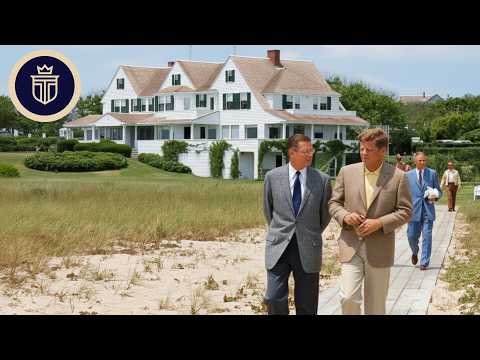
In this video, we tour the Kennedy family's mansions that lie beyond the Camelot mythology in history... it's a collection of properties that served as stages for one of America's most compelling political dynasties. ------------------- Gain FREE access to secret full-length episodes on architecture and wealthy family history "too scandalous for YouTube" by joining our newsletter: https://www.substack.com/@oldmoneyluxury ------------------- TIMESTAMPS: 0:00 Introduction 1:38 #1 The Kennedy Compound, Hyannis Port, Massachusetts 6:07 #2 The Kennedy White House, Washington D.C. 9:47 #3 The Winter White House, Palm Beach, Florida 13:54 #4 The Kennedy Residence, New York City 17:41 #5 Hickory Hill, Virginia ------------------- Joseph P. Kennedy spotted the main house at Hyannis Port in 1928 and transformed what began as a modest 1904 summer cottage into command central for America's most photogenic political dynasty. Here, nine Kennedy children learned to sail before they could properly tie their shoes, racing dinghies across Nantucket Sound while absorbing lessons in competition that would serve them in Washington. John F. Kennedy acquired a neighboring property in 1956, followed by Robert's adjacent acquisition, with Edward Kennedy joining in 1959, creating a three-house fiefdom. By the 1960s, John F. Kennedy ran his 1960 presidential campaign from these rooms, transforming parlors into war rooms where strategy sessions ran late into the night. The main house stretches across 9,000 square feet, housing 12 bedrooms with four reception rooms that accommodated everything from family christenings to cabinet meetings. In 2012, the main house passed to the Edward M. Kennedy Institute for $3.2 million courtesy of leftover campaign funds, with Senator Kennedy's widow Victoria honoring Ted's promise that the family seat would ultimately serve the public good. Between 1961 and 1963, First Lady Jacqueline Kennedy embarked on the most significant White House restoration in modern history, enlisting decorator Dorothy Parish to transform the building. She believed every piece should carry historical weight—authentic period furniture, significant artworks, and decorative objects that told the story of the republic. On February 14, 1962, Jacqueline Kennedy invited 56 million Americans into these transformed spaces through a televised tour that revolutionized how Americans thought about their cultural heritage. The Kennedys transformed the White House into a cultural center where Pablo Casals performed in the East Room for the first time since the 1930s, with Nobel Prize winners dining alongside artists and writers. In Palm Beach, Joseph P. Kennedy paid $110,000 in 1933 for a Mediterranean-style mansion that would become the family's winter command center. Within these sun-drenched rooms, Kennedy crafted significant portions of "Profiles in Courage," with his inaugural address first taking shape with ocean views as backdrop. Originally designed in 1923 for department store heir Rodman Wanamaker by society architect Addison Mizner, the mansion embodied the genius for marrying Mediterranean romance with American comfort. In 1964, Jacqueline Kennedy purchased a 15th floor penthouse at 1040 Fifth Avenue that would shelter her for the next three decades, marking her transformation from First Lady to private citizen. The apartment sprawled across 5,000 square feet with five bedrooms, herringbone floors, and views of Central Park that real estate agents would describe as "forever." David Koch acquired it before Glenn Dubin paid $32 million in 2006, with Thomas and Margerie Luhrman securing it in 2016 for $32.5 million. In 1955, Robert and Ethel Kennedy paid cash for a Georgian mansion in McLean, Virginia on six acres that would become Washington's most sought-after dinner invitation. Arthur Schlesinger Jr. organized the Hickory Hill Seminars, assembling Washington's sharpest minds around the Kennedy dining table where Supreme Court justices debated journalists. Robert Kennedy's assassination in 1968 ended Hickory Hill's role as a political salon, with Ethel remaining in the house with their 11 children. In 2009, technology entrepreneur Alan Kay purchased Hickory Hill, bringing Silicon Valley money to old Washington power while respecting the property's heritage. Now designated a National Historic Landmark, Hickory Hill represents a moment in American political culture when serious people believed dinner parties could change the world.









Elevate Your Home with Classic Elegance
AI-recommended products based on this video

InfinityGemsArt InfinityGemsArt Turquoise Jewelry Gifts For Women Natural Gemstones Beaded Choker Necklace, Crystals December Birthstone 18 inches Adjustable Silver Plated Chain, Graduation Day Gifts For Her 2025
